The “Waterloo World” level from the video game “Psychonauts” is a great example of video games utilizing Tufte’s theory of Micro-Macrocosm in a way only video games can. In this level two war generals are playing a game similar to chess and it is up to the player to physically enter the board game, becoming a part of the game itself, and recruit an army of soldiers in order to take over the opponents stronghold.
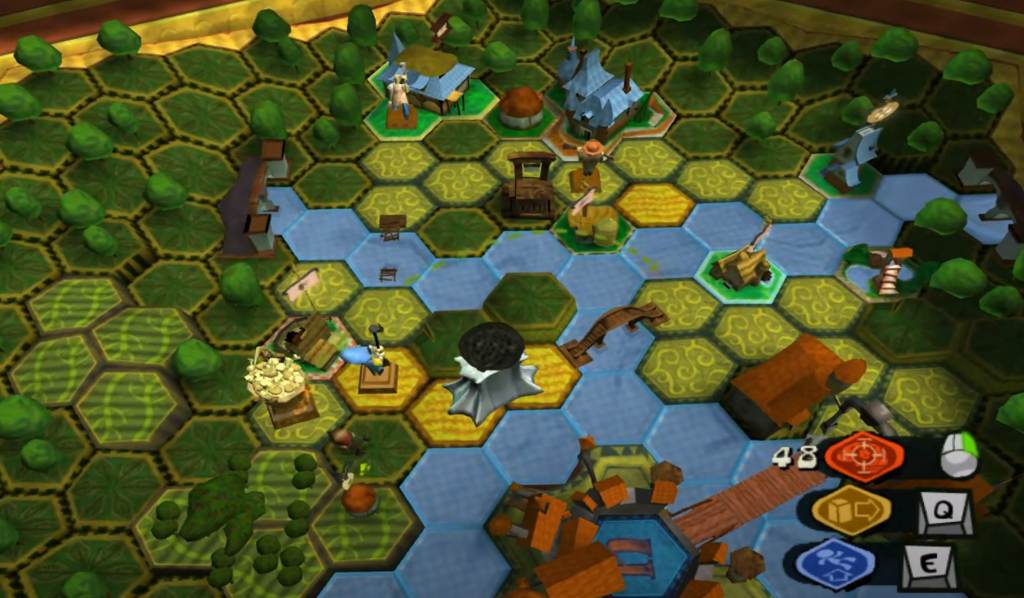

What makes this level a great example of Micro-Macrocosm within gaming is that the battlefield the board game is simulating can be viewed on both a micro and macro level, and both of these levels provide a different perspective on the battle being fought. While on the micro level (inside the board game), the player can talk to the soldiers and get to know them. We get to see where they live and learn about their lives and ambitions. This creates an emotional attachment between the player and the soldiers they recruit as the soldiers feel like real breathing people. However once all the soldiers have been recruited and the player leaves the game in order to view the battlefield at a macro level, these soldiers are no longer represented as individuals with personalities but rather as a singular chess piece with no expression. This chess piece is then thrown around violently across the board by the player until it is inevitably defeated and the soldiers killed. This represents how war generals and others responsible for sending hordes of people out to their deaths don’t view them as individuals but rather as a monolith, a chess piece to be used within the game of war. While not a Micro-Macrocosm in the traditional visual sense, Psychonauts uses its medium to provide a unique take on Micro-Macrocosm by letting the player examine and explore a space full of interesting characters and life, only for that life to be absent when viewed at a macro level, replaced instead with a blank emotionless chess piece to be used by the player as a pawn. The differences of these two viewpoints then creates a meaningful message that causes the player to stop and think about their actions.
0 Comments