Edward Tufte’s theory of small multiples suggests that it is easier for a viewer to distinguish and understand the differences between pieces of similar visual information when that information is all placed within the viewer’s singular parameter of vision. This is because “Small multiple designs, multivariate and data bountiful, answer directly by visually enforcing comparisons of changes, of the differences among objects, of the scope of alternatives.” (Tufte, 1990). This method of displaying information is very common within videogames, with the most popular example being the inventory screen.
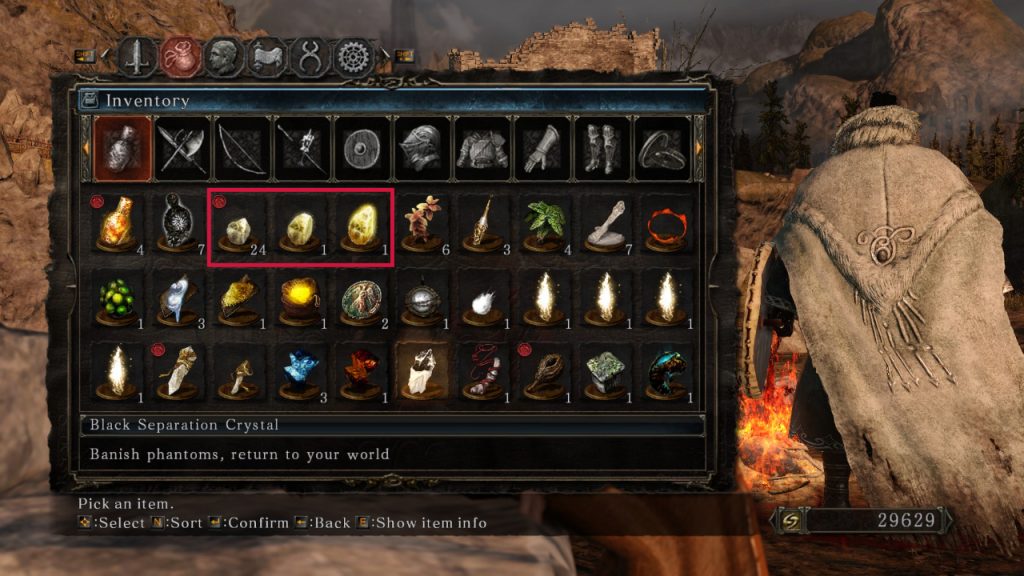
The image above is of the inventory menu in the game “Dark Souls 2”. We can see that the items are being presented as small multiples by being displayed in a grid like structure with all the items being similar sizes. This is a great design choice as it allows the player to instantly scan over all the items they possess and quickly find what it is they are looking for without having to look through them individually. It also encourages comparison by placing similar looking items alongside each other. In the top row we see three items known as “life gems” (highlighted in the red box) that are similar in appearance but increase in size and get more vibrant as they become more powerful. These three items being placed next to each other instantly lets the player know which life gem is the most powerful by letting them easily examine the visual differences between them within their singular parameter of vision. This is more effective than if they were each presented separately as the player wouldn’t have anything to compare them to which could cause the player to second guess if they are using the right one. The yellow of the life gems becoming more vibrant as they get more powerful is also an example of how colour can be used to measure information.
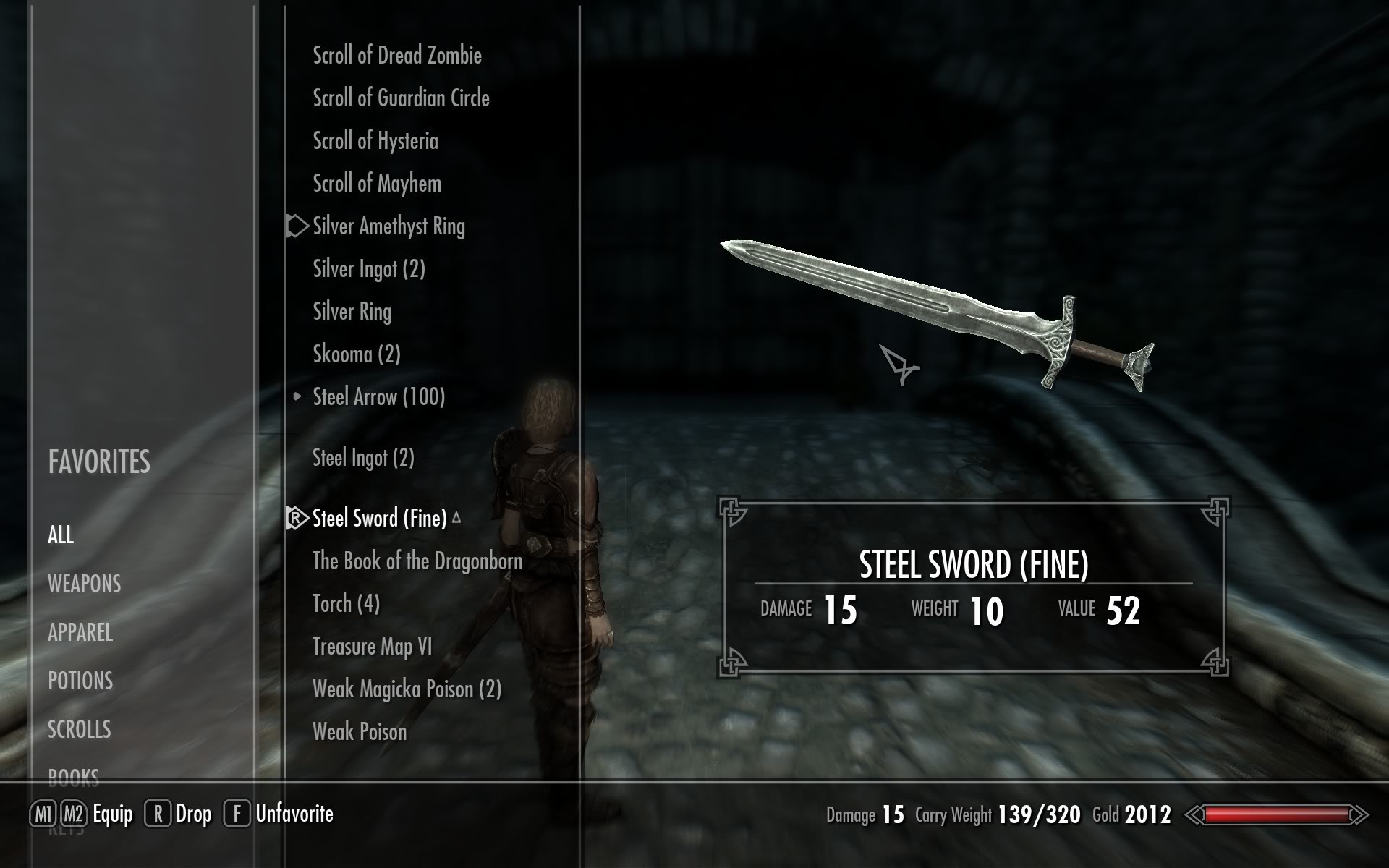
Another example of an inventory menu is the one from “Skyrim”. The Skyrim inventory is far less effective than the one from “Dark Souls 2” as it doesn’t use small multiples which allow the player to compare the items visually all at once, meaning the player must search through the list one at a time until they find the item they want.
Bibliography
Tufte, E. (1990) Envisioning information. Cheshire, CT: Graphics Press.
0 Comments